Airbus’s Wing of Tomorrow programme puts UK capability and our world-class supply chain at the heart of ultra-efficient next generation aircraft technologies. Through the ATI Programme, we’ve helped develop technologies through to flight testing which is a major milestone towards turning the UK aerospace technology strategy into flying parts boosting jobs and growth across the country.
Wing of Tomorrow is developing the design, development and manufacturing capabilities required for next generation single-aisle aircraft wings. It brings together advanced aerodynamics, folding wingtip technology, high rate out-of-autoclave composite structures, automated assembly, digital manufacturing and new build philosophies that reduce cost, complexity and cycle time. The programme has already delivered more than 100 technology bricks integrated through three full-size 17 metre wing demonstrators.
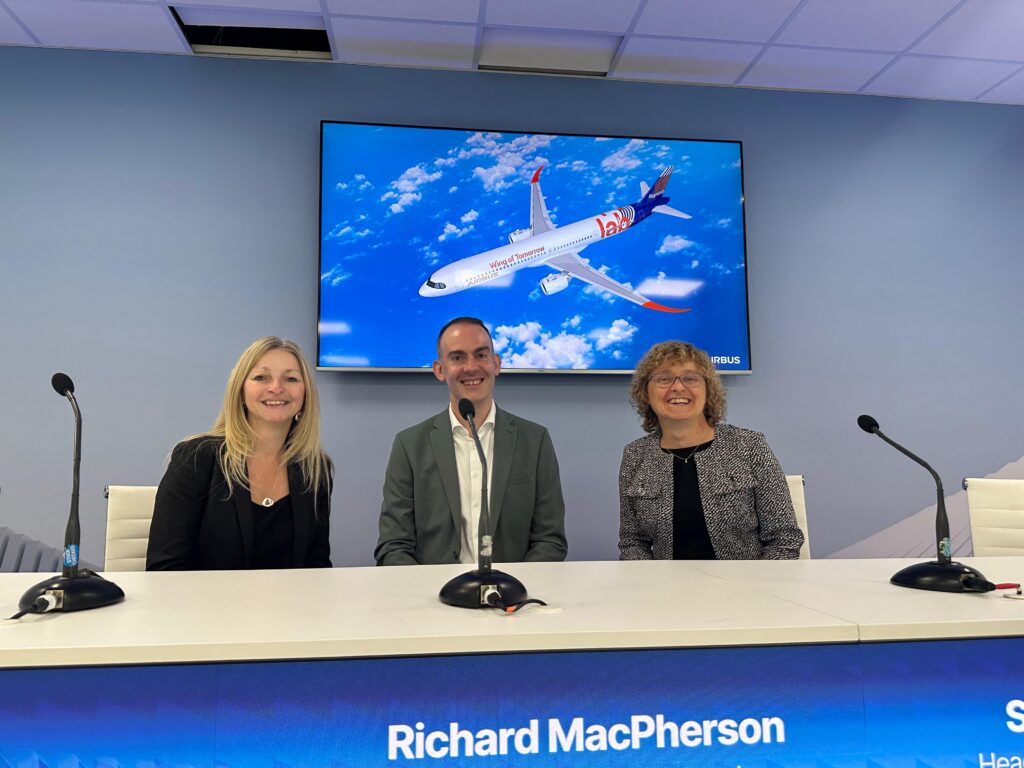
Now, the programme is maturing technologies towards the levels required for future aircraft programmes and the flight test campaign announced at Farnborough International Airshow is as important as it is exciting.
Future single-aisle aircraft wings will be longer, thinner and lighter to deliver a more structurally and aerodynamically efficient wing that can be manufactured competitively at higher rates than today’s aircraft. For the UK, this matters because wings are a national strength and a major source of future aerospace value. The ATI’s national aerospace technology strategy Engineering Growth, published in May, targets technology and manufacturing readiness by the end of the decade to maximise share on future platforms doubling the market value of UK aerospace by 2035.
Around half of the world’s commercial aircraft wings are produced in the UK, supported by world-class design, test, manufacturing and assembly capability. Maintaining that position on the next generation of single-aisle aircraft will require the UK to demonstrate not only excellent technology, but the ability to manufacture at unprecedented rates, with the cost, quality and repeatability demanded by global programmes.
Through the ATI Programme, joint government and industry investment has helped build and connect the capability base across the UK ecosystem and supply chain that makes this possible. Across aerospace composites, more than £900 million has been invested to date through ATI Programme-supported activity, including major wing and propulsion programmes.
Wing of Tomorrow sits at the heart of that investment story, linking critical national infrastructure: the AIRTeC wing test centre at Filton, the Wing Technology Development Centre at Filton, the NCC pilot line in Bristol, and AMRC Cymru in North Wales for wing assembly and industrialisation.
This infrastructure is more than a collection of facilities. It is a connected national capability that allows the UK to design, manufacture, assemble, test and validate future wing technologies at meaningful scale. It supports highly-skilled jobs, strengthens regional clusters in the South West, Wales and the wider supply chain and gives UK companies a route to participate in the next generation of aircraft development.
Wing of Tomorrow is also an example of the UK aerospace technology strategy in action. Engineering Growth identifies next generation single-aisle and future widebody aircraft as decisive opportunities for the UK, with ultra-efficient technologies central to reducing fuel burn and emissions. Wings are one of the largest levers for aircraft efficiency and advanced aerostructures, automation, digital manufacturing and high-rate industrial systems are all core themes within the strategy.
The programme is equally important to the UK composites opportunity. The ATI’s 2025 Market Spotlight: Growing UK Composite Capability identified the potential for the UK aerospace composites market to grow from £726 million in 2022 to more than £4.5 billion by 2050, driven by future aircraft platforms and the need for high-rate composite manufacture. Wing of Tomorrow is already demonstrating many of the capabilities required to capture that prize: integrated composite structures, novel architectures, automated assembly, advanced tooling and scalable industrial processes.
The next decade will determine where future aircraft value is created. By combining Airbus’ leadership, ATI Programme investment, UK research strengths and a broad industrial supply chain, Wing of Tomorrow is helping ensure the UK is not only ready for the future of aviation, but positioned to lead it.
The ATI Programme is delivered in partnership between ATI, the Department for Business, Innovation, Science and Trade and Innovate UK.