Parker Meggitt
Development of the Inclined Ducted Heat Exchanger System (DBAHX)

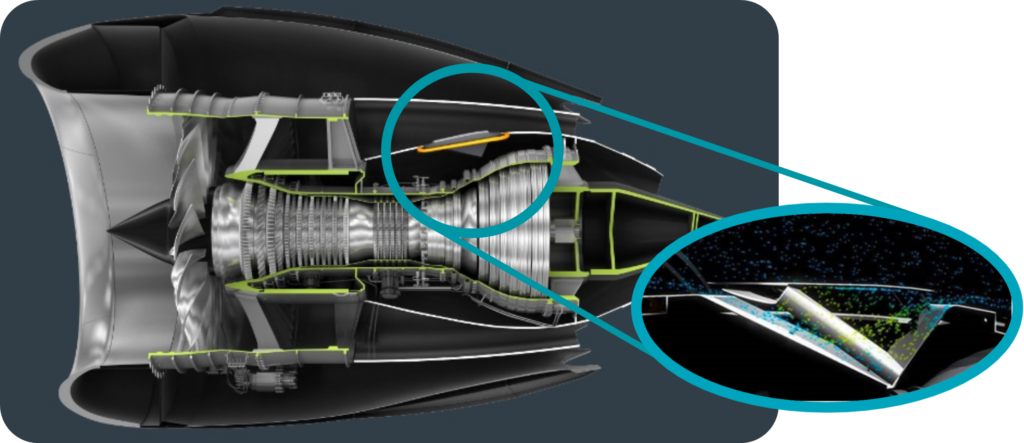
The Inclined Ducted Heat Exchanger System serves as an enabler for next generation engines, offering advantages for applications such as Ultra High Bypass Ratio civil turbofans, open rotor engine architectures and hydrogen fuel cell powered aircraft. By enhancing aerodynamic efficiency, the system offers reduced drag resulting in fuel consumption benefits for the airframe and supports the transition to cleaner aviation technologies.
Development of the Inclined Ducted Heat Exchanger System has been supported by extensive numerical simulations that modelled its performance under operational conditions across a flight profile. These simulations provide critical insights into airflow dynamics, influencing thermal performance and overall efficiency, allowing for the optimization of design parameters prior to physical testing.
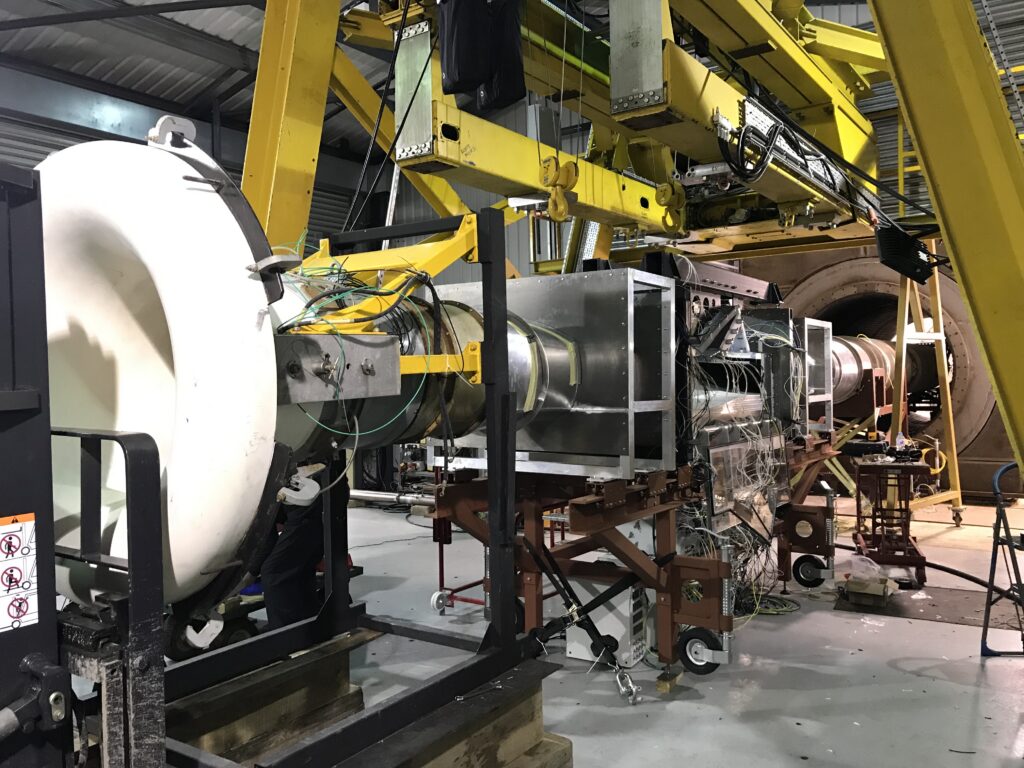
To validate these simulations, comprehensive full-scale testing was conducted using a custom wind tunnel developed in collaboration with a UK SME. Equipped with advanced instrumentation, the wind tunnel accurately measured pressure and flow characteristics, allowing verification of the simulation. Tests confirmed the system’s overall effectiveness, particularly its innovative inlet duct design, which minimises flow separation while being more compact than traditional diffusers, enhancing aerodynamic efficiency and reducing drag.
Validated design tools were also developed to facilitate quick assessments of new designs, leveraging data from simulations and wind tunnel tests. These tools enable engineers to rapidly iterate and refine designs, streamlining the development of next-generation aviation technologies that meet rigorous performance and sustainability standards.
In addition, an additive manufactured ejector design was created to promote additional airflow during off-design operating conditions. This ejector addressed challenges in maintaining optimal performance outside ideal parameters, ensuring reliable aircraft performance across various flight scenarios.
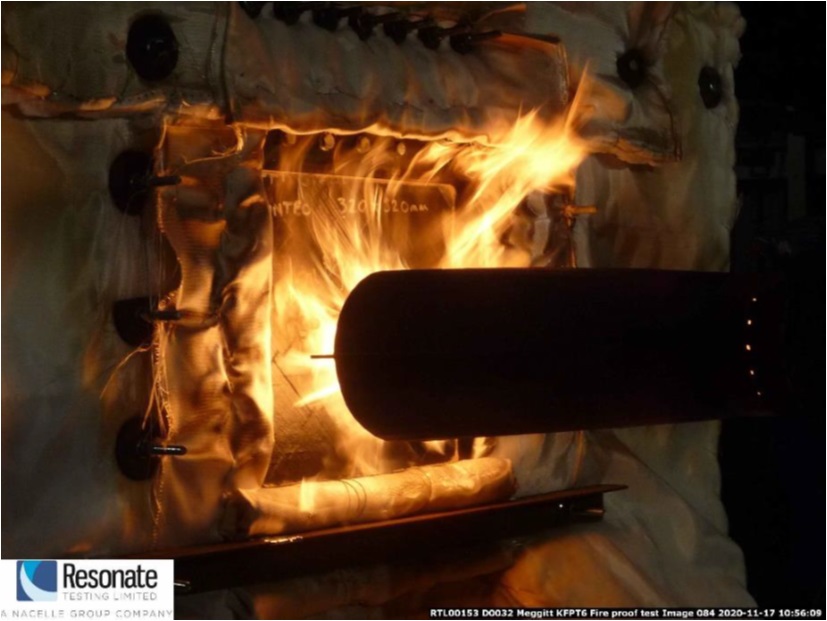
Fire-proof composite duct technology was advanced in collaboration with the National Composites Centre (NCC) and the Advanced Manufacturing Research Centre (AMRC) as well as industrial partners. These partnerships focus on leveraging cutting-edge materials and automated manufacturing techniques to develop lightweight, high-performance components that meet modern aviation requirements.
Advancements in hand and automated layup techniques were facilitated by new multi- and uni-directional weave prepreg, with innovative materials successfully passing stringent fire testing.