Ionix Advanced Technologies
High-Temperature On-Engine Structural Health Monitoring and Sensing for Aerospace Applications (HTHSM)

The HOSH project set out to address a key challenge in aerospace engineering: real-time acoustic and ultrasonic monitoring of critical aeroengine components under extreme temperature conditions. Traditional sensors struggle to perform reliably at the high temperatures found in operational jet engines, limiting their ability to provide continuous, in-situ diagnostics.
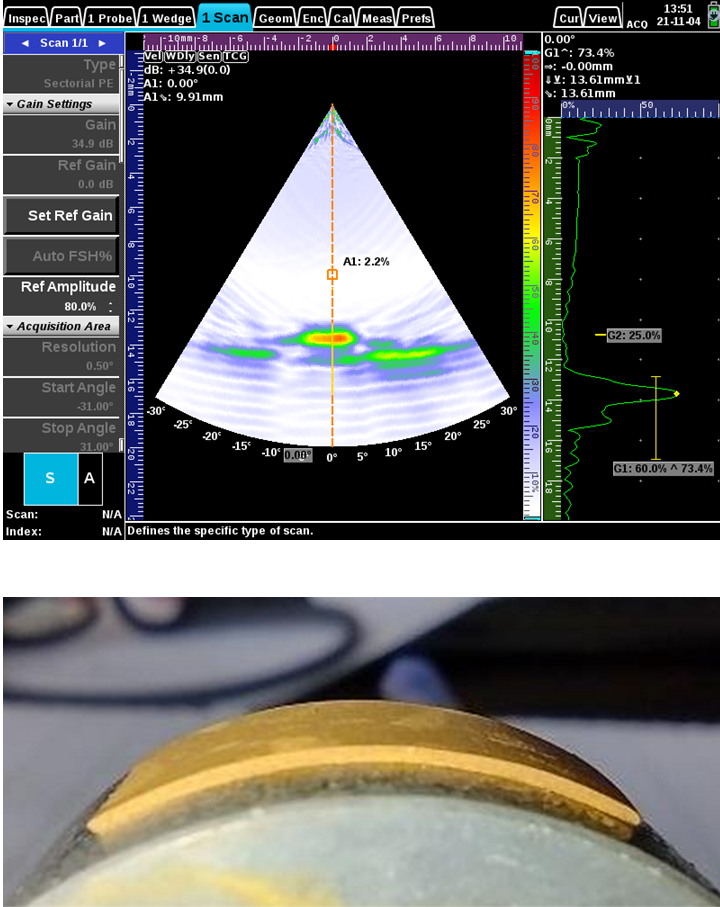
The (HOSH) project successfully developed advanced ultrasonic and acoustic sensors capable of real-time condition monitoring in aeroengines under extreme temperatures of up to 580°C. By utilising Ionix’s proprietary high-temperature piezoelectric materials, these sensors enable improved fault detection, predictive maintenance, and enhanced engine efficiency. The technology offers applications in pump cavitation and bearing health monitoring, coating integrity assessment, and leak detection.
The project has demonstrated feasibility for both on-ground and in-flight monitoring, significantly reducing maintenance downtime, improving safety, and contributing to the UK’s leadership in aerospace sensing technology.
Key achievements include:
- Developed the first high-temperature ultrasonic sensors capable of continuous monitoring in aeroengines up to 580°C.
- Demonstrated high signal integrity and durability in aerospace-relevant conditions.
- Advanced the technology to TRL4, proving its feasibility for future commercialisation.
- Validated the effectiveness of thick-film piezoelectric deposition methods for high-temperature applications.
- Established strong industry collaboration, positioning the technology for integration into future aerospace platforms.
Challenges Overcome
- High-temperature performance: Traditional piezoelectric sensors degrade at high temperatures. By using Ionix’s proprietary material, the project overcame this limitation.
- Material deposition and integration: Developing a reliable method for directly applying thick-film piezoelectric coatings to metal substrates required significant material science innovation.
- Signal integrity in noisy environments: Achieving a high signal-to-noise ratio in the presence of extreme vibration and temperature fluctuations required extensive optimisation of sensor design and electronics.
- Industry adoption: Engaging aerospace stakeholders early in the project ensured alignment with industry requirements, helping to mitigate risks associated with future adoption and certification.
This project delivered a significant step forward in aerospace sensor technology, with the potential to revolutionise how engine health is monitored in both test and operational environments.