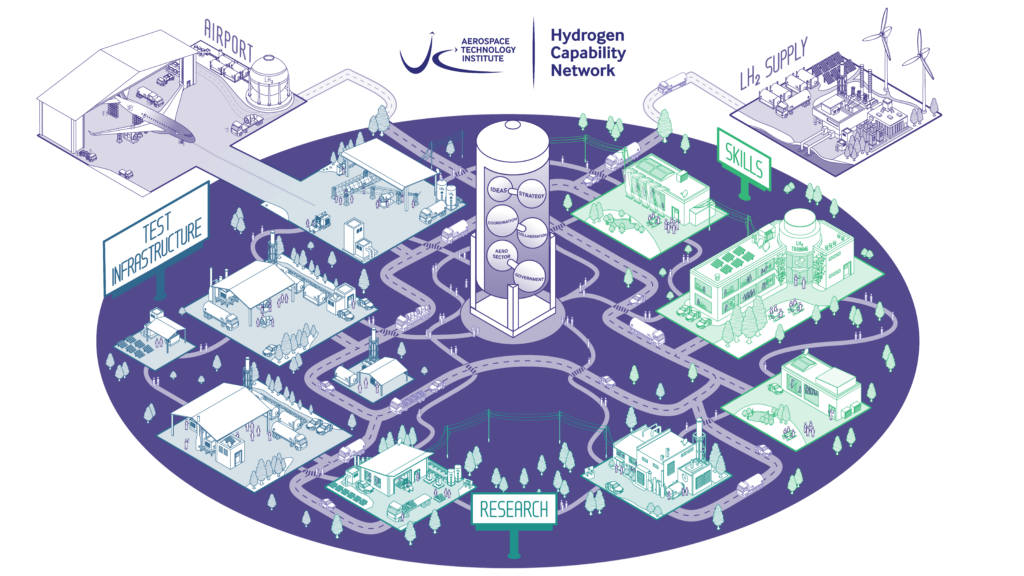
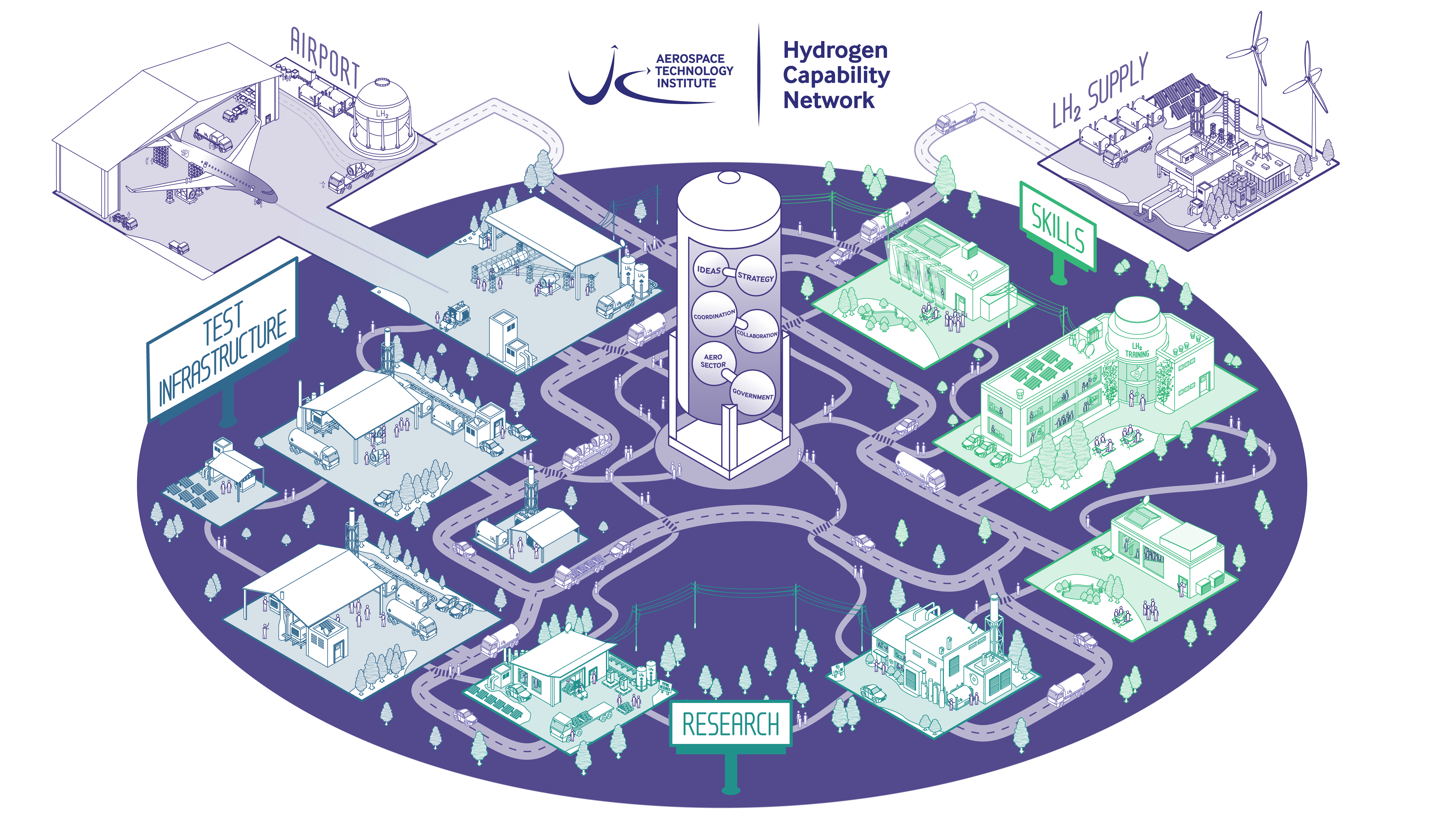
 The ATI’s Hydrogen Capability Network (HCN) is to focus on test infrastructure, research and skills as the three key enablers to hydrogen-powered aircraft technologies with the programme’s first report published today.Launched in April 2023 and funded by the Department for Business and Trade, the HCN is an ATI project set up to identify and deliver the key requirements to accelerate the development of a new era of liquid hydrogen-powered flight in the UK. The HCN mission is to secure long-term UK capability in zero-carbon emission aircraft and a competitive advantage for the UK aerospace sector. Continuation of the programme has been confirmed to at least April 2025.Over the past 12 months, the HCN has developed the key recommendations from the ATI’s FlyZero project, which identified liquid hydrogen as the zero-carbon emission fuel with the greatest potential to scale to large commercial aircraft. Recommendations taken forward by the HCN include examining liquid hydrogen (LH2) demand, R&D test requirements and UK capability gaps.Industry Minister Alan Mak said: “The potential for using hydrogen as fuel is huge for the future of aviation, and we want our world-leading aerospace sector at the forefront of this new and emerging industry of zero emission air travel.“I’m pleased to see the progress the ATI is making in leading the way on this cutting-edge work in its new report, helping our aerospace industry soar to new heights and supporting thousands of jobs while growing our economy.”In its first report ‘Securing Liquid Hydrogen Capability in UK’, the HCN has identified the three immediate priorities for action:
- Test infrastructure: Establish at least two open access hydrogen test hubs to provide the required testing infrastructure, LH2 supply and expertise to satisfy UK aerospace priority test needs.
- Research: Conduct a four-year strategic research programme on Cryogenic Hydrogen Materials Testing Standards (CHyMES) to enable product design and certification.
- Skills: Launch pilot initiatives to accelerate action on skills and coordinate the sector’s skills needs in cryogenics and LH2
Delivering the three immediate priorities provides the UK with a strong foundation to achieve the longer-term ambitions for the UK hydrogen aerospace ecosystem: larger-scale testing, demonstration in an airport environment and ultimately the design and manufacture of liquid hydrogen aircraft technologies.Laura Cuss, Programme Director, said: “Liquid hydrogen-powered aircraft are key to aviation’s decarbonisation journey and achieving Net Zero 2050. This revolutionary technology shift for aviation requires unprecedented coordination and collaboration between government, industry and academia to maximise UK market share.“By establishing hydrogen technology test and demonstration infrastructure, progressing research priorities and tackling the skills gap, the HCN will ensure a coordinated approach to accelerate the development of hydrogen aircraft technologies in the UK.”The HCN is also setting out to develop an overarching sector strategy and recommendations for longer-term strategic interventions for hydrogen research and development in the UK. This will include what interventions are required in the long term to further develop this ecosystem as understanding and testing becomes more mature.This strategic overview will complement the ATI’s technology strategy Destination Zero, which focuses on priority technology areas for investment through the ATI Programme. It will also align with the work of the Jet Zero Council, which is investigating sustainable aviation fuels (SAF) and the regulatory framework required to deliver zero emission transatlantic flight within a generation.The ‘Securing Liquid Hydrogen Capability in UK’ report is available to download now on the ATI website, together with detailed reports on skills and research.Hear Programme Director Laura Cuss speaking at Sustainable Skies World Summit on Thursday 16th May on the panel: Meeting the challenges for hydrogen integration.ENDSAbout the ATIThe Aerospace Technology Institute (ATI) is an independent organisation that works alongside government and industry to transform UK aerospace through technology and innovation. The ATI is funded equally by the Department for Business and Trade (DBT) and by industrial recipients of project grants who pay a small levy. ATI projects are chosen and overseen through close collaboration with Innovate UK and DBT.