The Aerospace Technology Institute (ATI) has today published a new Market Spotlight setting out how the UK can build on its existing strengths in aerospace assembly to secure future manufacturing workshare, high-value jobs and long-term industrial capability.
Assembly accounts for up to 35% of the cost of producing an aircraft. The global aerospace assembly market is forecast to grow from $37 billion in 2025 to $65 billion by 2035. ATI estimates that the addressable UK assembly market for future ultra-efficient platforms could reach $4.75 billion by 2035 and $8.65 billion by 2050, representing more than 21% of the potential 2050 UK sector value identified in ATI’s Engineering Growth technology strategy.
Realising this opportunity will depend on the UK competing successfully for wing and engine assembly on the next generation of aircraft, and on developing the supply chain capability to support those positions.
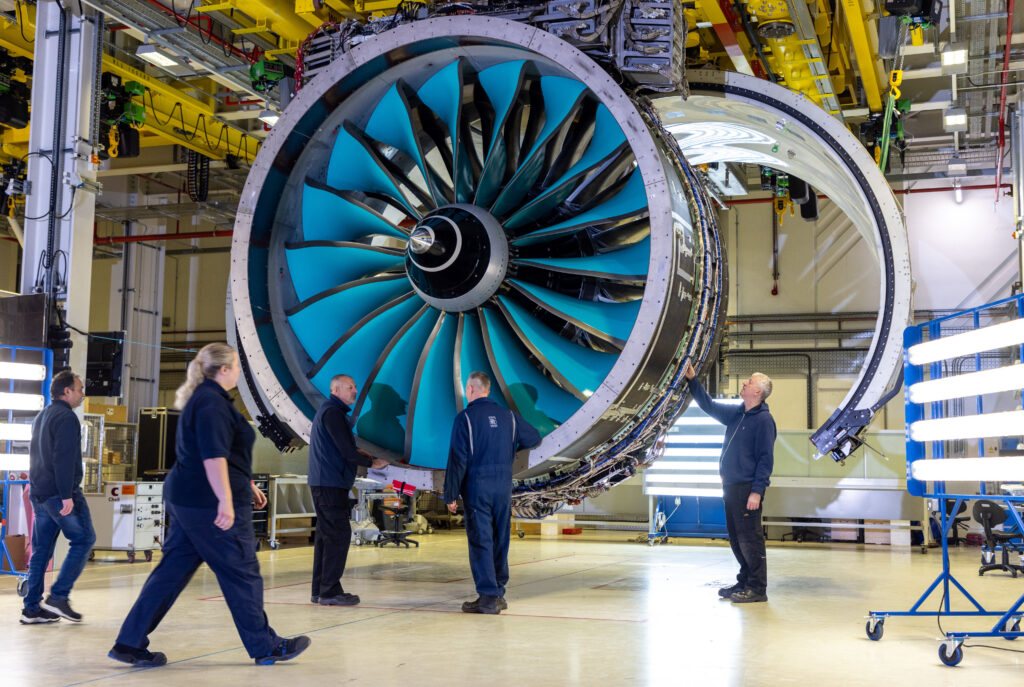
The UK already has significant strengths in assembly, including almost all commercial Airbus wings at Broughton and Belfast, large commercial engines for widebody aircraft at Rolls-Royce in Derby, and Safran landing gear in Gloucester and Northern Ireland. But international competition for future aircraft manufacturing is increasing, and securing UK work on the next generation of aircraft is not guaranteed.
Production rates for next generation single-aisle aircraft are expected to exceed what legacy, manually intensive processes can deliver economically. Advanced assembly technologies will need to be integrated and proven at scale before new programmes enter production, and the UK will need scalable, integrated and digitally connected assembly systems capable of delivering future aircraft at the required rate, quality and cost.
The Market Spotlight identifies five priorities for coordinated industry action and investment:
Demonstrating readiness: de-risking the assembly of critical products through pilot lines and pre-production facilities.
Systems integration: creating a UK supply chain capable of designing, delivering and supporting complete assembly systems.
Automation capability: embedding design-for-assembly and automation principles in future aircraft and manufacturing-system development.
Collaboration: accelerating deployment and adoption of assembly technologies across all tiers of UK and global aerospace supply chains.
Digital capability: enabling digitally connected assembly systems that improve productivity, quality and industrial competitiveness.
Scaling assembly will require more than automation. It will require coordinated change across aircraft design, measurement, fixturing, upstream component manufacturing and supply chain operations.
Jacqueline Castle, Chief Technology Officer, ATI said: “Assembly is already a UK strength, but the next generation of aircraft will be built at higher rates. The technologies and systems to do that must be proven at scale before programmes enter production.
“We have set out where we need to focus so the UK has the technology, supply chain and systems-integration capability to compete. By working together across industry, government and the research community, we can secure future manufacturing workshare and the high-value jobs and economic growth that come with it.”
The five priorities will provide the foundation for a UK Assembly Plan, turning the evidence and industry consultation behind the Market Spotlight into coordinated action.
To refine the plan, ATI is establishing an Assembly Working Group, bringing together subject-matter experts and organisations from aerospace and relevant adjacent sectors. The group will report its initial findings in 2027, informing future activity to strengthen UK aerospace assembly and systems-integration capability.
Background
Since 2014, government and industry have invested more than £300 million through the ATI Programme in assembly technologies and manufacturing capabilities, including more than £172 million in grant funding.
The Market Spotlight’s findings are reinforced by ATI’s 2025/26 consultation with 23 organisations and more than 70 individuals across aerospace manufacturers at all tiers, industrial integrators and academia.