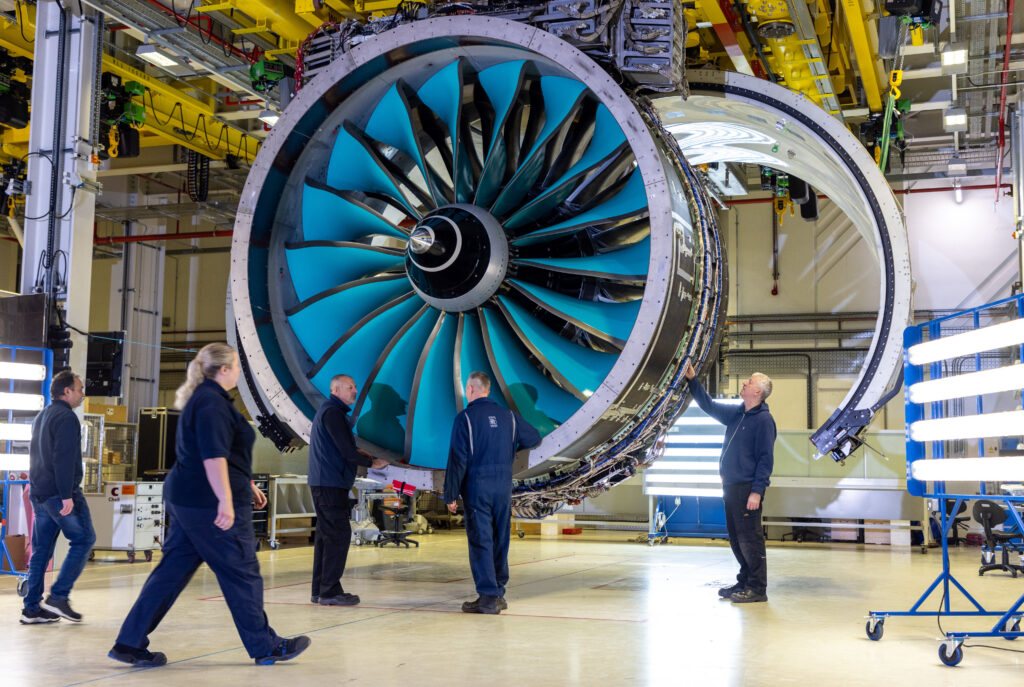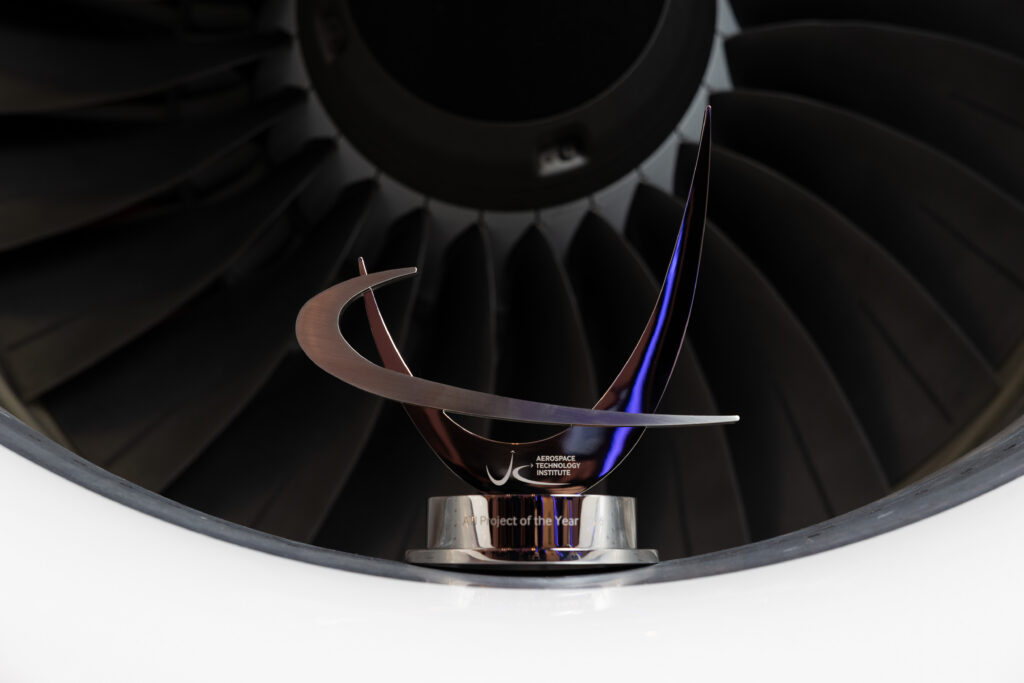
The winners of the Aerospace Technology & Innovation Awards 2026 were revealed at the ATI Conference 2026: Engineering Growth at ICC Wales, celebrating the people, projects and organisations making an outstanding contribution to UK aerospace.
K3Metrology, James Cropper, Alloyed, the UK Civil Aviation Authority, Intelligent Energy and the Rolls-Royce-led RACHEL project were recognised across six categories. Their achievements span more efficient aircraft manufacturing, higher-value uses for recovered materials and progress towards practical hydrogen-powered flight.
This year’s awards recognise not only promising technologies, but also the work needed to move them towards industrial use: testing representative components, demonstrating integrated systems and bringing industry, researchers and regulators together.
Congratulations to all our winners, highly commended entries and shortlisted entrants. Thank you to the judges and everyone who contributed to this year’s Aerospace Technology & Innovation Awards, helping celebrate the innovation and collaboration advancing UK aerospace. Read on to discover more about this year’s winners.
ATI Hub Breakthrough Award: K3Metrology
For fast, accurate measurement of large aircraft structures. Built on 15 years of national laboratory research, its system combines simultaneous multi-target measurement, self-calibration and real-time confidence values for every reading.
Judges highlighted its transition from research to UK spin-out, £2.75 million in seed investment and a customer trial reporting up to 60 per cent greater measurement efficiency. It could enable robots to act directly on measurement data, reducing repeat inspections and rework.
Highly commended: Quix Analytics, whose platform connects engineering test data with its configuration to help engineers reuse trusted evidence; and Sora Aviation, which is developing a 30-seat electric vertical take-off and landing aircraft for higher-capacity regional transport.
Innovation Award: James Cropper
For technology that converts carbon fibre waste into higher-value composite applications, helping retain the value of recovered material.
Compatible with established manufacturing processes, the technology offers a scalable route to producing complex geometries and supporting demanding composite applications. It represents a practical step towards more circular composites, improving manufacturability while strengthening UK advanced-materials capability.
Highly commended: Alloyed, for its development of a high-temperature nickel superalloy and manufacturing route for complex engine components; and Enoflex, for lightweight, flexible composite pipework for liquid-hydrogen aircraft and infrastructure.
Making the Difference Award: Alloyed
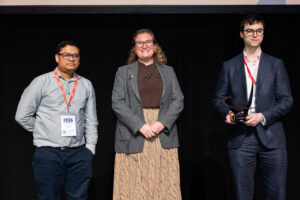
For work bridging the gap between a promising material and practical aerospace manufacturing.
Through the successful manufacture and testing of representative components, the project demonstrated the potential for complex, near-net-shape aerospace components with higher temperature capability than current solutions. By bringing geometry, post-processing, surface protection and application evidence into one development route, it has increased confidence in industrial adoption and created opportunities for future commercialisation.
Highly commended: THINKITTECH, whose AMSynchro demonstration links metal-powder histories with condition monitoring and laboratory records to support future industrial investigations and reuse decisions.
ATI Team Award: UK Civil Aviation Authority, Hydrogen Challenge
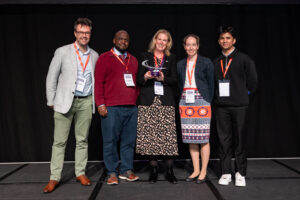
For bringing industry and regulators together to address how aircraft, airports, infrastructure and regulation can develop in step for hydrogen aviation.
Using a sandbox approach, the collaboration developed an end-to-end understanding of the hydrogen ecosystem and a pathway towards the safe operation of net-zero aviation technologies. Across its first two rounds, it supported 11 projects spanning aircraft, propulsion, airport operations, infrastructure and safety.
Highly commended: Rolls-Royce, for its hydrogen demonstrator collaboration connecting propulsion research with operational and safety expertise; and the University of Nottingham, for connecting electrification research with specialist engineering, manufacturing and test capability for industry.
Shaping the Future Award: Intelligent Energy
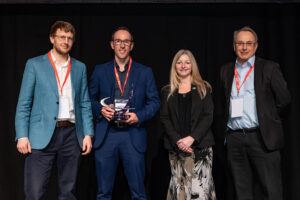
For progress in tackling a fundamental challenge for aviation fuel cells: removing heat without adding excessive weight and complexity.
Its patented approach uses water evaporation within the fuel cell to manage heat. Through H2GEAR, the technology advanced with a reported threefold improvement in power density. The judges recognised its potential to support lightweight, high-power-density fuel-cell systems for zero-carbon flight, while noting that further scale-up and validation remain ahead.
Highly commended: Darvick, for developing representative hydrogen and cryogenic materials-testing capability; and Moog, for fuel-control valves and actuation technologies for future hydrogen propulsion systems.
ATI Project of the Year: RACHEL, led by Rolls-Royce
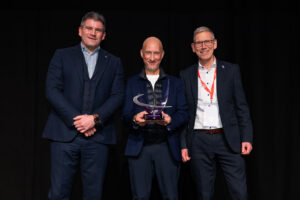
For its ambitious research translated into engineering achievement and UK capability through the ATI Programme.
RACHEL set out to develop key technologies and an integrated powerplant architecture for a liquid-hydrogen gas turbine, including electrical systems and innovative tanks for gas storage. It contributed to a wider programme’s landmark demonstration in which a modified Pearl 15 engine operated on 100 per cent hydrogen through a complete simulated flight cycle, including maximum take-off power.
Beyond the demonstrator, the project has helped build hydrogen expertise across universities, research centres and government agencies, strengthening industry – academia collaboration and developing specialist skills.
Highly commended: CloudNC’s ARRP, which independently demonstrated reported machining programming savings of 40 to 60 per cent; and GKN Aerospace’s H2GEAR, whose hydrogen-electric propulsion work included a hyperconducting motor demonstrator exceeding 99 per cent efficiency.