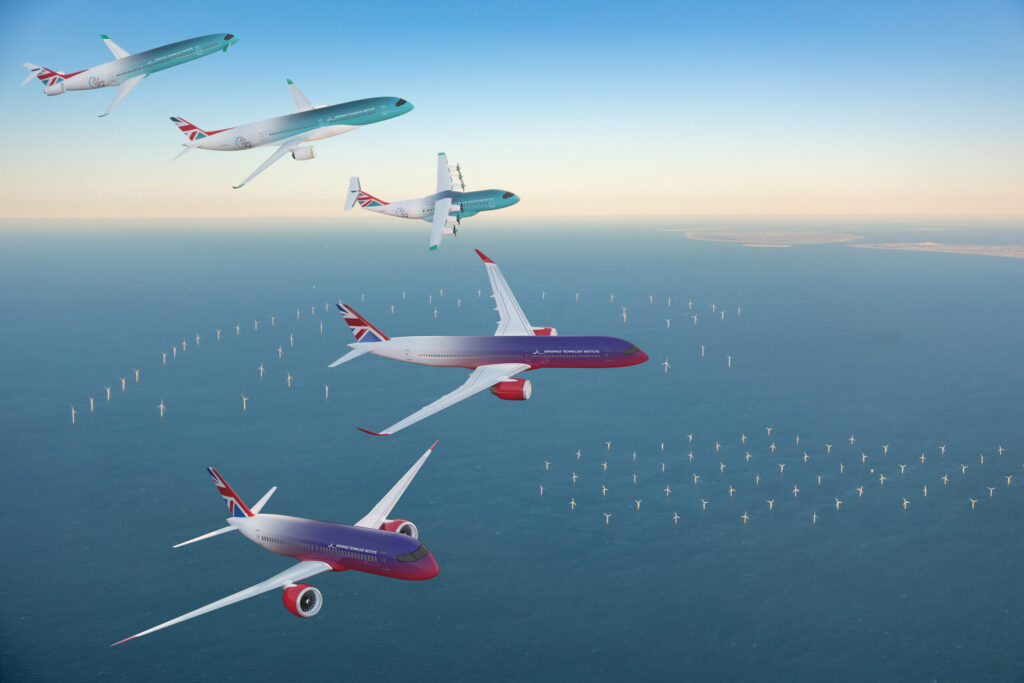
Next week’s Farnborough International Airshow will once again convene the world of aviation and aerospace at a critical time. At this year’s airshow, the ATI will again be showcasing UK capability to a global audience with a focus on the steps needed to deliver against Engineering Growth in readiness for next generation aircraft.
This is the message we took to last month’s AIAA 2026 AVIATION Forum, where civil aircraft topics focused strongly on disruptive technologies, including blended wing body airframes, supersonic flight and cryogenic fuels including Liquid Natural Gas (LNG). International collaboration is essential and events like AIAA and Farnborough both shape the conversion and offer a glimpse into national priorities.
In the US, NASA’s Advanced Aircraft Concepts for Environmental Sustainability (AACES) initiative, that commissioned industry and academia to develop transformative aircraft designs, propulsion technologies, and sustainability solutions for commercial aviation by 2050, reported findings. The projects found blended or double-bubble bodied aircraft offering additional lifting surface to increase aerodynamic efficiency, coupled with cryogenic fuelled gas turbines could be the architecture of the future. Liquid hydrogen fuel was discussed with a preference expressed by more than one study for methane or ‘Jet-M’ as it is now being referred. Studies indicate LNG fuel could provide sustainability benefits comparable to Sustainable Aviation Fuels (SAF) but at a lower cost and with more plentiful supply. Future aircraft designed to carry and use more than one fuel such as Jet-A and Jet-M together were also proposed and NASA will take these findings forward stating their intention to see a cryogenic aircraft flying by 2050.
Seeing the U.S. ecosystem more openly discussing cryogenic fuels for beyond next-generation aircraft is welcomed by the ATI, where cryogenic research projects funded in the UK, aligned to the ATI Technology Strategy Zero-Carbon Technologies Roadmap are being progressed. UK research in this area is relevant for both liquid hydrogen and LNG, with additional disruptive projects looking at fuel-cell electric propulsion and opportunities to capitalise on the presence of cryogens on board to enable hyper or super-conducting electrical power system efficiencies.
Other highlights from the conference included progress updates on the development of blended-wing body concepts with an excellent conversational session moderated by Scott Hamilton of Leeham News and Analysis, with JetZero former CTO, Mark Page and Natilus CEO, Aleksey Matyushev. Both organisations are taking an agile, pragmatic approach to bring aircraft demonstrators to flight as quickly and cost-effectively as possible by integrating existing engines and off-the-shelf systems from other aircraft where feasible. The organisations’ developments are focused on the disruptive airframe shape, aircraft control, aerodynamics, operational and safety aspects, to unlock claims that these designs can significantly reduce fuel burn. ATI sees opportunity in the future application of the UK’s advanced composite manufacturing innovations for these novel airframes when looking beyond the demonstrator phase.
Updates were also provided on Boom Supersonic’s progress, along with the flight test status of NASA’s X-59 experimental aircraft following its successful first supersonic flight. NASA’s Quesst mission will fly the X-59 over several U.S. communities to collect data on public perception of the quiet sonic thump it will make at supersonic speeds.
As well networking and planned engagements with international counterparts at the event that drew over 2,500 attendees from across the global aerospace sector, the ATI provided its own disruptive element by presenting a technical paper to spur discussion on how future ducted gas turbines may radically grow bypass ratio to increase efficiency, whilst remaining underwing. The ATI’s novel ‘Infinity Fan’ aims to instigate ducted engine architecture innovations for beyond next generation aircraft. This example also complemented the ATI’s messaging at our Presentation Session to share the UK’s new Technology Strategy Engineering Growth and the four Technology Roadmaps: Ultra-Efficient; Zero-Carbon; Industrial Competitiveness and Non-CO2 Technologies. The roadmaps show the technology journey stretching out to 2050. Maintaining attention on the highly anticipated next generation single aisle aircraft launches that may come towards the end of this decade, ready for a mid-next decade entry into service, without losing focus on the longer term is the challenge. But it’s an exciting one to have!
Turning attention ahead to next week, the ATI is looking forward to welcoming visitors to our stand in Hall 1. Come and discover more about Engineering Growth and the aerospace strengths across the UK. We’ll be highlighting some of the actions needed at pace to maximise UK content on next generation single aisle, including a detailed action plan to deliver composites technologies as a key enabler of growth. I look forward to seeing you there!